A Little Island Big on Virtuosity.
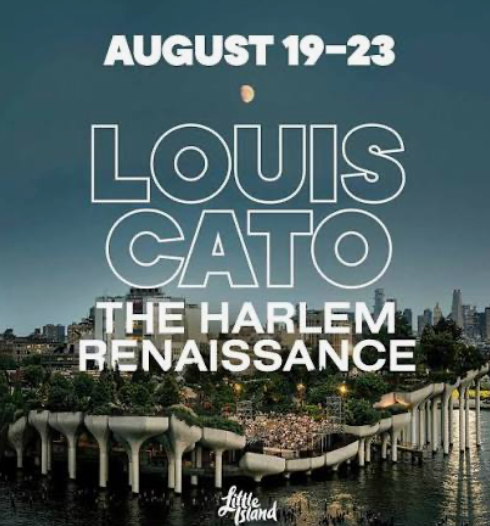
A 90-minute journey through Cato’s collective family history.
When CBS’s The Late Show ended its 11th season on May 21, 2026, I knew I’d miss Stephen Colbert’s unique blend of intellectual comedy, empathy, and fearless call for political accountability. But I had no sense of longing for a certain musicianship. That is until last night, when I had the revelatory experience of seeing its bandleader, Louis Cato front an all-star ensemble at the amphitheater on Little Island.
With the towers of Hudson Yard’s glowing like tiki torches, the comradery of bleacher-like seating, and the sparkling blackness of the Hudson mere feet away, the outdoor space felt magically intimate. And the perfect venue for Cato’s 90-minute jazz journey, titled “The Harlem Renaissance.” It began with Cato alone on stage, steadily thumping on the body of his guitar to produce the “pulse.” Inviting us to listen for the metaphoric heartbeat, heard in double- and triple-time as he travelled from the 1920’s to the Sixties, from the church to the Apollo… it was a narrative device that could have been cloying. But was instead clarifying. Interspersed between numbers were recorded snippets of conversations with his father, who recounted the family’s migration north to find work, the wonder of Harlem’s Savoy Ballroom (which could hold 4,000 dancers), and more.
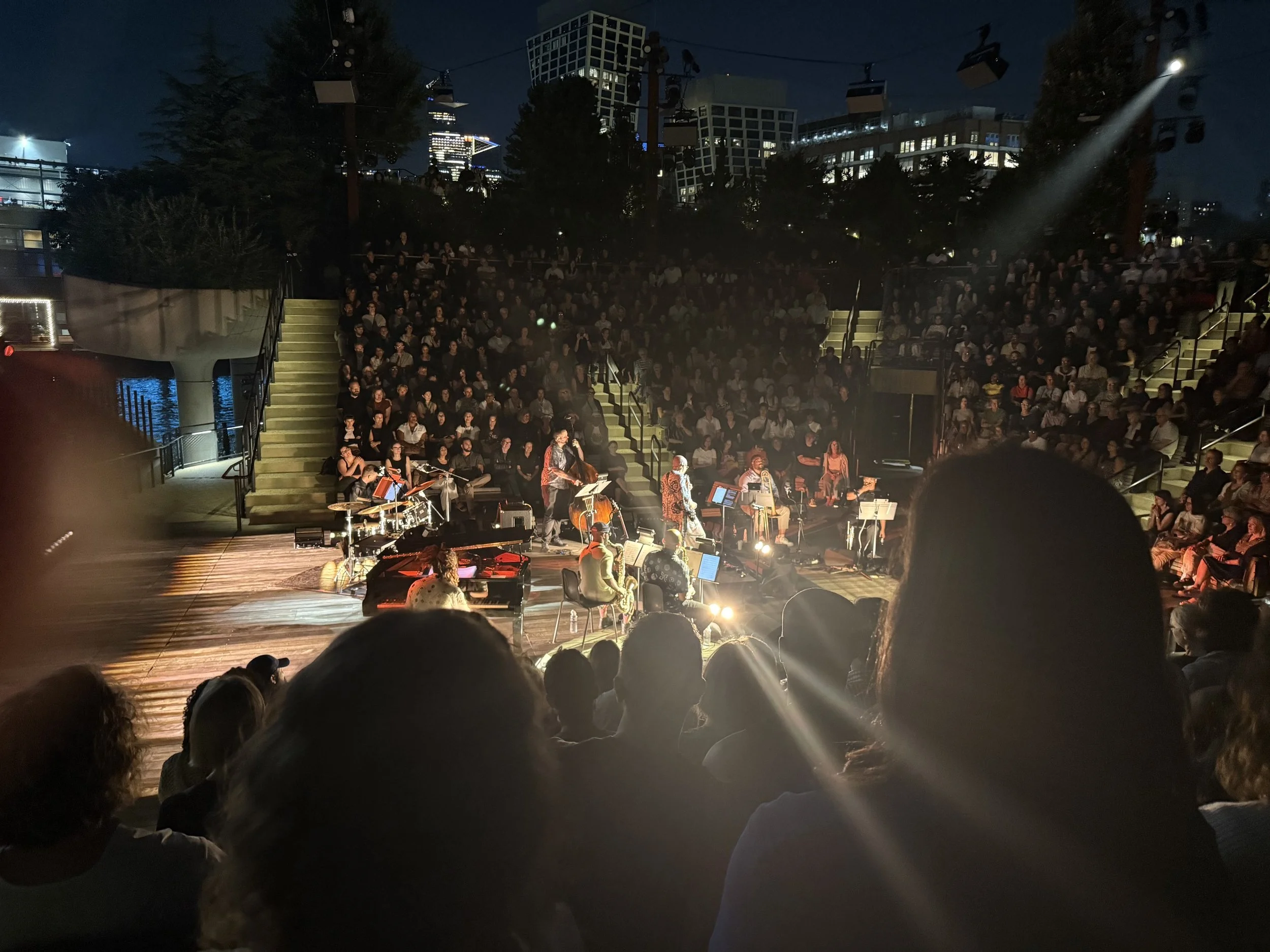
Bandleader Louis Cato and his all-star ensemble at the amphitheater on Little Island, August 21st, 2026
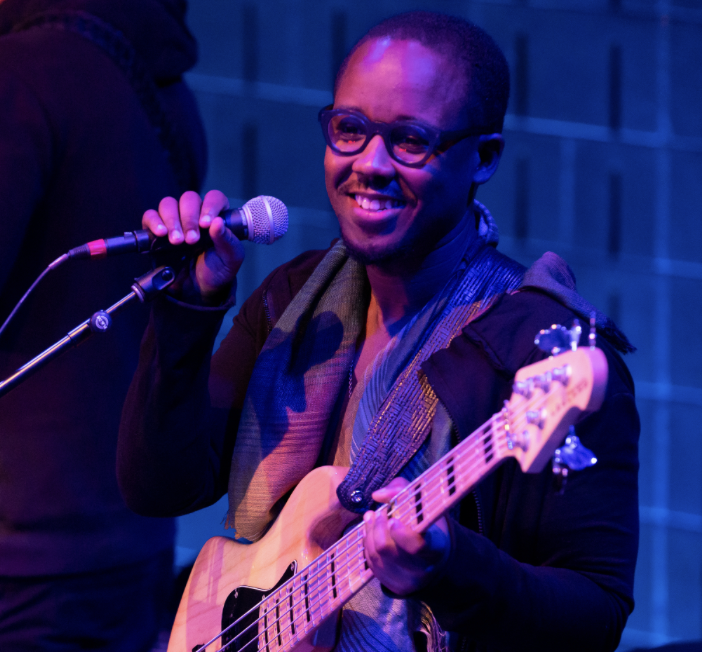
Joined by Louis Fouché (alto saxophone), Alphonso Horne (trumpet), Philip Kuehn (bass), Jeffrey Miller (trombone), Tivon Pennicott (tenor saxophone), Mathis Picard (piano), and Evan Sherman (drums), Cato treated us to a lazily swinging “Night and Day” (whose lyric, “in the roaring traffic’s boom, in the silence of my lonely room” resonated all the more with the hum of 10th avenue behind us). It was followed by a dazzling “Ain’t Misbehaving,” in which Mathis Picard parried back and forth from traditional to today, interjecting Fats Waller’s familiar thumping stride piano with sparklingly inventive runs.
Next, a signature tune of 40’s bandleader, Fletcher Henderson had Jeffrey Miller demonstrating a facility on the trombone that erased any notions of “marching bands” or its being the “poor man’s trumpet.” He milked its deeper tone (as different from the trumpet’s as the alto sax is from the tenor) for all it was worth. Schooling us on an instrument’s unique sound much as Prokofiev’s “Peter and the Wolf” did for us as children.
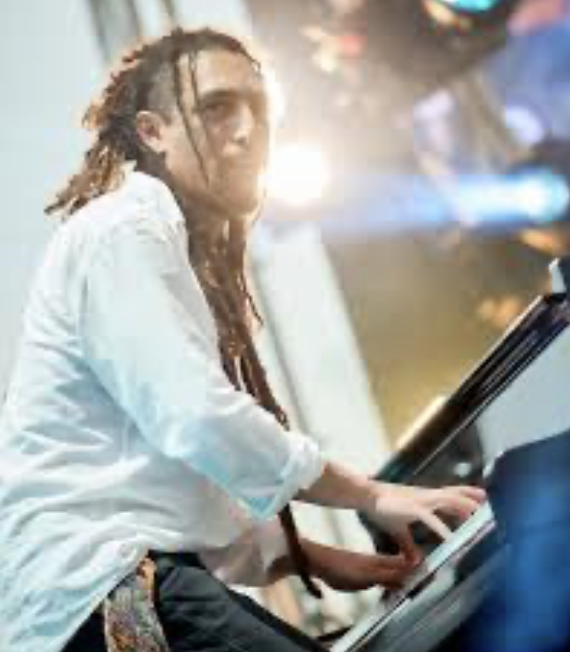
Mathis Picard had me hearing the traditional stride piano differently.
Alphonso Horne’s clarion trumpet upped the ante, his inventiveness building in a way that left me vibrating in my seat. (And the angel Gabriel more than a little miffed.) Each man’s solo felt joyfully spontaneous, yet artfully structured; improvised in the moment but timeless in its effect. And while audiences have lately been denounced for turning standing ovations into meaningless, near-automatic gestures, there was not a single instrumental solo that did not deserve one. Cato’s guitar (and quick stint behind the drums), included. And the man has a BEAUTIFUL voice. To give a bandleader a mic is often a regrettable indulgence. But Cato possesses a richness and range reminiscent of George Benson (whose 1990 studio album, “Big Boss Band”, is surprisingly good!)
Other than being shoehorned into the Blue Note to hear Ray Charles’ 10-piece orchestra as a teen, my history with headliners has been limited to the classic trio: piano, drums and bass (often the ubiquitous Jay Leonhart). Cato’s memorable collective showed me what I’ve been missing. And had me imagining the glory days of Count Basie and Duke Ellington, who tailored his compositions for musicians like Johnny Hodges, Cootie Williams, and Harry Carney (turning them into legendary jazz soloists in the process). While a guest appearance by jazz vocalist Catherine Russell lent the proceedings a coy chemistry reminiscent of Mildred Bailey and other “girl singers” of that era.
Being spared torrential rain was a blessing. Hearing a handful of first-class musicians trade kick-ass solos even more so. Admittedly, I’ve had a prejudice against jazz orchestra performances--imaging them to be an evening of abstract, hectic original compositions. But seeing the sampling of performances scheduled for Fall (below), that’s sure to end.
No, they won’t have a river breeze or salmon-pink sunset (as we had last night). But inspiring virtuosity doesn’t need them.
Upcoming Jazz Orchestra Performances:
Aug. 23rd, Birdland: Scott Reeves Jazz Orchestra
Sept. 1st - 5th, Birdland: Greg Osby: Dancing with Duke (featuring Ethan Iverson, Eric Harland, Jd Allen, Virginia Macdonald, and Lonnie Plaxico)
Sept. 9th - 13th, SMOKE Jazz Club: Steve Davis Sextet
Sept. 16th, Jazz at Lincoln Center: Bobby Watson Quintet
Sept. 16th - 20th, SMOKE Jazz Club: Steve Turre All-Star Sextet
October 12th, Jazz at Lincoln Center: Steven Feifke Big Band Album Release
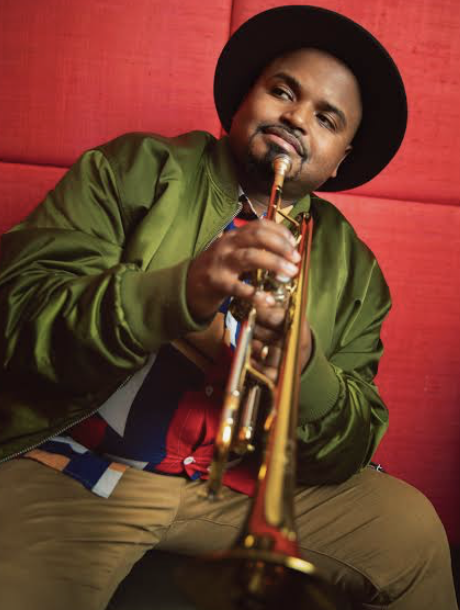
Alphonso Horne is a sought-after sideman who’s performed with Wynton Marsalis, Lady Gaga and Tony Bennett (among others).